

You would be surprised how often this starts with a normal day.
A parent glances at their teenager’s phone screen and sees Snapchat open, maybe a few selfies and some streaks. Nothing alarming, right? So just like you, they also assume everything is fine. But what many don’t realize is that beneath that simple interface sit several lesser-known Snapchat features and privacy settings that can change how the app is used. Yes, you read it right: there are advanced Snapchat settings that can completely change how the app is used.
Several digital safety studies suggest that many teens prefer platforms with disappearing content and private messaging. That preference is exactly why apps like Snapchat dominate daily usage patterns among teenagers because conversations feel temporary, even when the impact isn’t.
This is not about blaming teenagers. Most of them are simply checking out what the platform offers. The real gap is awareness. And that’s where awareness becomes important for parents.
This is not about blaming teenagers. Most of them are simply checking out what the platform offers. The real gap is awareness. And that’s where awareness becomes important for parents.
This guide helps parents understand these features in a simple and practical way.
The Invisible Layer Parents Don’t See
Snapchat is designed to feel private. Messages disappear, notifications are subtle and controls are tucked away. That’s exactly why many lesser-known Snapchat features often go unnoticed.
For example, disappearing messages aren’t just a default; they can be customized. A chat can vanish immediately after viewing or stay for 24 hours. This depends entirely on user settings. It also has the ability to delete messages even after sending and conversations can leave almost no trace.
Experts highlight that disappearing message platforms can reduce traceability of conversations. This factor makes it tough for parents to step in early when something goes wrong. Add to that the Snap Map, which brings us to one of the most misunderstood tools.
What ‘Ghost Mod’ Actually Does

If you have ever wondered why you can’t see your child’s location on Snap Map, it’s likely because of Ghost Mode.
Here’s Snapchat ghost mode explained in simple terms: it allows users to hide their real-time location from everyone. No friends, no contacts, complete invisibility.
On the surface, that sounds like a safety feature. And in many ways, it is. But it also means parents often assume location sharing is active when it’s not.
Some studies suggest that teens are not always aware of when location sharing is active or disabled. They are also clueless when it isn’t because of how quickly these settings can be toggled.
What makes this more complex is that Ghost Mode can be turned on and off instantly. So a teen might appear visible at one moment and completely hidden the next. That flexibility is part of why hidden Snapchat features can be tricky to track.
What is Quick Add and Why It Matters
Another feature that flies under the radar is ‘Quick Add.’ It suggests people to connect with based on mutual friends or contacts.
Here’s the concern: these suggestions aren’t always people your child actually knows well. Accepting a request takes seconds. Instantly they are connected to someone outside their usual circle. Experts often highlight that weak or unfamiliar connections can increase the chances of unwanted interactions. These are usually a common starting point for unwanted interactions across social platforms.
This is where Snapchat privacy settings play a big role. Privacy controls allow users to decide who can contact them. Unless you review it manually, the default experience can be more open than parents expect.
The ‘My Eyes Only’ Vault
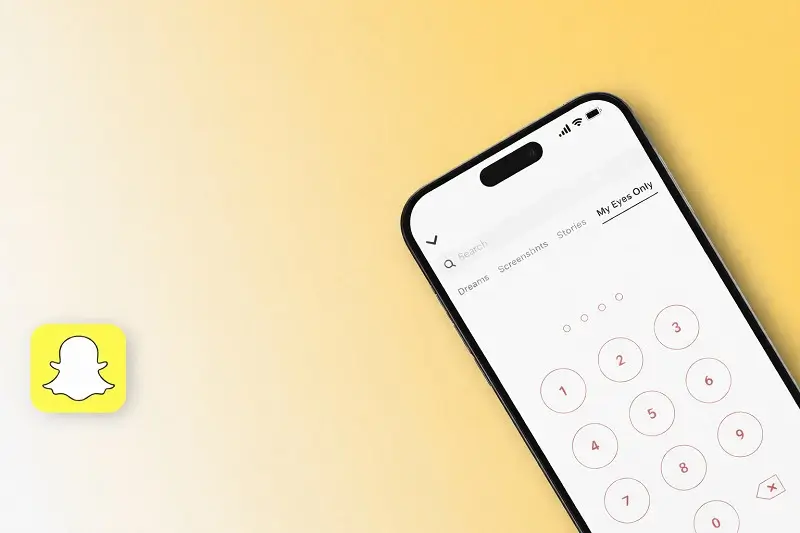
Now this is one feature that often surprises parents.
“My Eyes Only” is a password-protected section inside Snapchat where photos and videos can be hidden. Without the passcode, even someone holding the phone cannot access that content.
Used responsibly, it’s just a privacy tool. But without awareness, it becomes one of those lesser known Snapchat features that creates a complete blind spot.
Common Risks Linked to Snapchat Usage
Cybersecurity organizations and child safety groups have consistently highlighted a few patterns:
- Disappearing messages can reduce accountability in conversations
- Location-sharing features can expose real-time whereabouts if not controlled
- Quick connections increase interaction with unfamiliar users
- Private storage areas limit visibility for guardians
These are commonly observed patterns across social platforms with similar features. In multiple global safety reviews, parents reported that they discovered concerning interactions only after patterns had already developed. That’s why understanding Snapchat settings and user behavior is important for parents.
Is Snapchat safe for kids?
The honest answer to the question “Is Snapchat safe for kids?” depends on how it’s used. And this is where the shift is happening: parents are moving from reactive concern to proactive awareness.
Many parents today explore Snapchat activity trackers to better understand activity patterns and ensure safer interactions.
What Parents Can Practically Do & Where They Fail Mostly
Instead of reacting with fear, a smarter approach is to build awareness and structure.
Start with simple steps:
- Sit with your child and explore the app together
- Review privacy and location settings openly
- Talk about who they are connecting with and why
- Keep communication judgment-free
Some families also consider Snapchat monitoring tools to gain additional visibility into usage while maintaining trust and transparency.
Wondering how parents can see Snapchat conversation history? The reality is that full recovery isn’t always possible due to the app’s design. That’s why proactive visibility matters more than reactive checks.
This is why proactive Snapchat activity monitoring becomes more useful than trying to recover deleted data later.
A Smarter Way to Stay Informed

Some parents choose structured tools to support Snapchat monitoring in a more consistent and practical way. Instead of relying only on assumptions, these tools help parents stay informed about digital behavior trends.
The goal is not to invade privacy, but to reduce blind spots while maintaining open communication. We have Snapchat ghost mode explained and keep track of your child’s safety despite constantly evolving Snapchat hidden settings. This approach supports early awareness without creating unnecessary pressure.
Awareness Isn’t Enough Anymore; Act Now!
Platforms evolve. Features get more private. Interactions get faster. And teenagers adapt quicker than ever. That’s why combining awareness, communication, and smart monitoring approaches is becoming more common.
And in today’s digital environment, that shift from guessing to knowing is exactly what keeps families one step ahead. Make TiSPY your partner in knowing what’s happening before it becomes a problem. The first advisory call is free!