

Telegram can be useful. But these days it has become a private doorway between your child and a stranger. That is what makes telegram app scams so worrying for parents. By the time a parent notices something is wrong, the child may already have shared personal information, photos, money, passwords or their location.
The risk is not limited to Telegram. The FTC says people reported losing $12.5 billion to fraud in 2024, while reported losses from scams starting on social media reached $2.1 billion in 2025. So what are the warning signs and how to deal with them as a parent?
Why Telegram Can Be Difficult for Parents to Watch
Telegram allows people to communicate through usernames and groups without necessarily sharing their phone numbers. Public usernames can make it possible for strangers to find and message users.
Telegram also allows Secret Chats with end-to-end encryption. Plus it has self-destructing messages. Telegram itself warns that screenshots cannot be prevented completely.
That does not mean Telegram is automatically unsafe. It means parents need to understand who their child is talking to, what they are being offered and whether the conversation is becoming secretive or threatening.
If you have wondered, Is Telegram Safe for your child, the honest answer is: safety depends heavily on how it is being used.
10 Warning Signs of Telegram Scams
1. A Stranger Suddenly Contacts Your Child
This is one of the biggest red flags. A stranger may say: Hi, I saw you in this group. Are you a gamer? You’re really cute. Can I ask you something?
The conversation may appear harmless at first. Scammers often build trust before asking for anything. Parents should pay attention when a child suddenly starts communicating with people they have never met offline.
2. They Ask Your Child to Keep the Conversation Secret
- Don’t tell your parents.
- Delete our messages.
- They won’t understand.
These suggestions by strangers or even friends are serious warning signs. A genuine online friend should not need to isolate your child from trusted adults. Secretive communication becomes even more concerning when the person is asking for photographs, money, passwords, personal information or meetings.
3. The Conversation Becomes Romantic Very Quickly
Telegram dating scams can start with simple friendship. Then the person becomes unusually affectionate. They may say they love your child. They may constantly message them. They may create an emotional connection and eventually ask for money, gifts, personal information, or intimate pictures.
This is how telegram romance scams can develop. The FTC reported that nearly 60% of people who lost money to romance scams in 2025 said the scam started on social media.
For parents, sudden secrecy plus intense online romance should never be ignored.
4. Someone Promises Easy Money
- Invest $100 and make $500.
- Guaranteed crypto returns.
- Join my private investment group.
- Use this trading platform.
Such baits as messages are classic warning signs of telegram investment scams.
Investment scams were the largest fraud-loss category reported to the FTC in 2024, with $5.7 billion in reported losses. The median reported loss for investment scams was more than $9,000.
Take your child seriously if he/she talks about investments, cryptocurrency, trading groups or guaranteed profits, etc.
5. Someone Requests Cryptocurrency
Cryptocurrency is attractive to scammers because payments can be difficult to reverse.
A scammer may ask your child to send Bitcoin or another cryptocurrency. A bait to unlock an account, receive a reward, invest, pay a fee, or help someone.
The FBI reported that cryptocurrency-related complaints in its 2025 Internet Crime Report involved more than $11 billion in reported losses, with investment fraud remaining the major driver of losses. A request for cryptocurrency should immediately trigger a conversation with your child.
6. They Send a Suspicious Link
A Telegram message may contain a link to:
- A fake login page
- A fake investment website
- A fake giveaway
- Malware
- A fake delivery notice
- A fake account verification page
This is telegram phishing. The message may look professional. The website may even copy a legitimate company. Tell your child never to enter passwords, payment details, verification codes or personal information simply because someone known or seem-to-be known to them sent a link.7.
7. They Ask for Private Photos
A person may claim to be the same age as your child. They may exchange photos first. Then they may ask your child for something more private. Once the image is sent, the scammer may threaten to share it with friends, family, classmates or other groups.
The FBI calls this financially motivated sextortion. It warns that predators can target children through messaging apps, social media, gaming platforms and other online services.
If this happens, do not blame your child. Get help immediately.
8. They Create Urgency
Pressure is a scammer’s best friend. The FBI specifically advises people to take a beat rather than act under pressure.
- Send it now.
- You only have five minutes.
- Don’t tell anyone.
- Your account will be deleted.
- Your money will disappear.
Teach children one simple rule: If someone online is rushing you, pushing you to act as per their desire… stop that conversation.
9. They Want Personal Information
Telegram allows people to communicate through usernames without necessarily exposing phone numbers. Thus, parents should not assume that knowing someone’s username means they know who that person really is.
A scammer may ask for:
- Home address
- School name
- Phone number
- Parent’s name
- Bank details
- Passwords
- Verification codes
- Location
- Private photographs
10. Your Child Suddenly Deletes Everything
This is the warning sign many parents discover too late. Your child suddenly:
- Deletes Telegram conversations
- Changes passwords
- Hides the phone
- Becomes nervous when you approach
- Receives unusual notifications
- Talks about online friends
- Starts receiving unexplained payments
- Stays awake messaging strangers
None of these proves a scam. But several signs appearing together deserve attention.
What Parents Can Do Now
Start with a calm conversation. Then explain that scammers can pretend to be anyone.
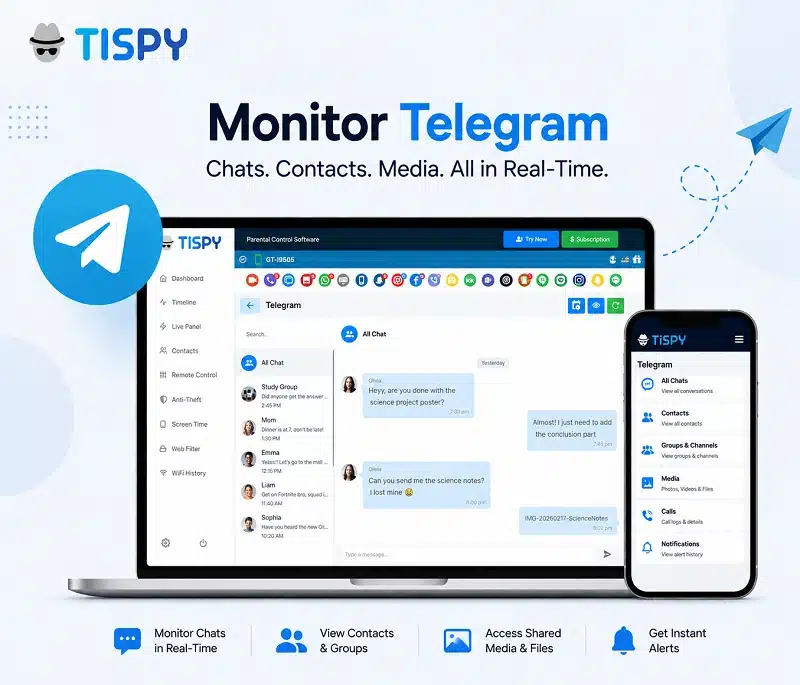
If you need more visibility, a Telegram Monitoring App can help parents review relevant Telegram activity from a parent dashboard. TiSPY says its Telegram monitoring solution provides visibility into chat activity, online status and group interaction. It also shows message history, subject to device and operating-system limitations.
TiSPY also provides broader parental monitoring software covering multiple communication and social apps. It comes along with features such as application monitoring, web filtering, location tracking and screen-related monitoring.
Worried About Telegram App Scams? View What Your Child Is Really Facing
Parents – do not need panic! If your child uses Telegram regularly, now is the time to understand their digital world, not after something goes wrong. Don’t wait for a Telegram scam to reach your child. Start monitoring suspicious activity today with TiSPY. We get you early warnings, protect smarter and take action before it’s too late.
![Ultimate Guide for Parents to Spy & Monitor Kid’s IM [Instant Messaging] Apps](https://tispy.net/wp-content/uploads/2019/11/ultimate-guide-monitor-kids-instant-messaging-apps-1-300x300.jpeg)