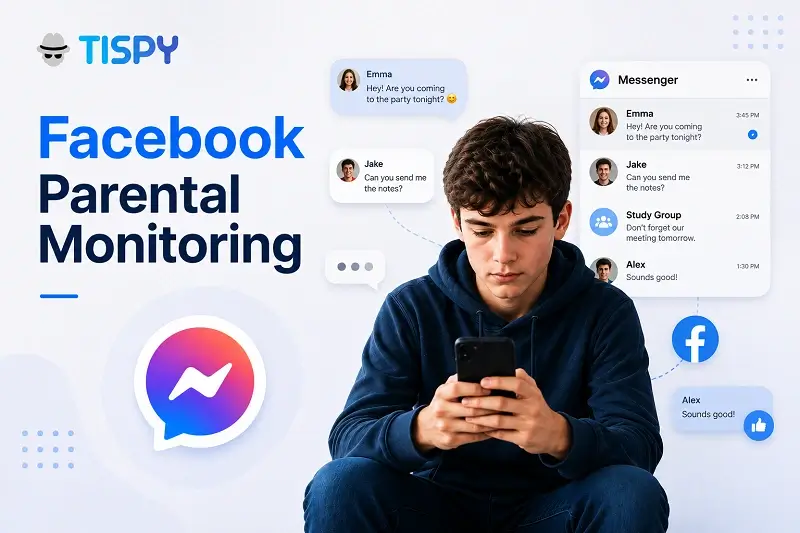
Parents rarely start looking into Facebook Messenger. They never do it because they want to control every conversation their child has.
But did you know that your child may be online more often than you realize? And you may not hear about the risks.
- Ofcom’s 2026 research found 99% of 8–17-year-olds are online, while 7 in 10 children aged 11–17 recall seeing harmful content online.
- UNICEF also warns that online spaces can enable strangers and abusers to reach children. The question now is — who is talking to your child right now?
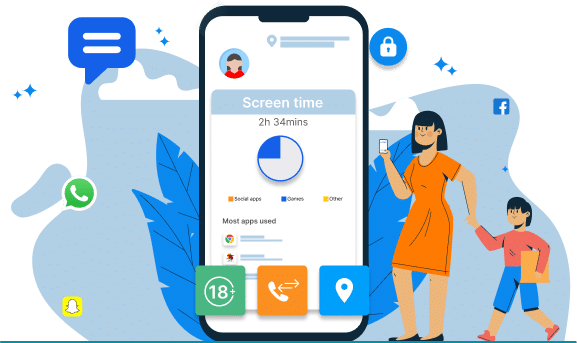
Today we are here to showcase why your child needs Facebook Parental Monitoring. The goal of your children’s protection and not secret surveillance.
What Is Facebook Parental Monitoring?
Parental oversight of a minor’s Facebook activity to help identify genuine online-safety risks. That may involve reviewing:
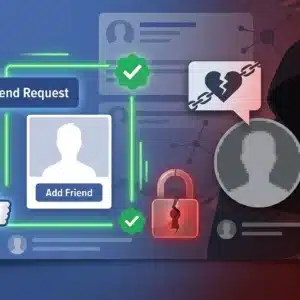
- New friend requests and unfamiliar contacts
- Messenger conversations and interactions
- Groups and potentially risky connections
- Shared links, photographs or personal information
- Unusual communication patterns
The healthiest approach starts with communication. Tell your child what you are checking and why. Monitoring should support trust. So try to establish family rules through broader guidance on Parents Monitoring Social Media. Must share when an adult should step in and what information children should never share online.
Fake Messages From “Friends”: A Growing Facebook Messenger Scam
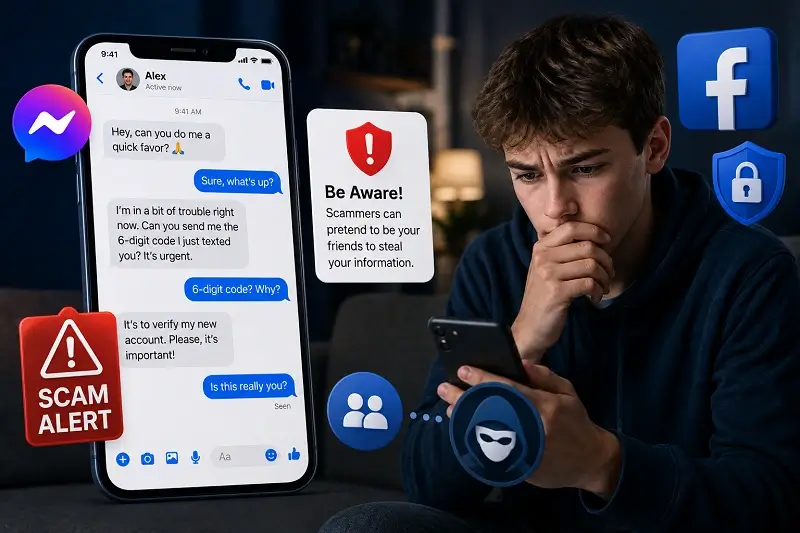
One increasingly important concern is Facebook Messenger fake messages from friends.
15-year-old Sarah recently revealed to her dad in the US. She informed him that a message looked completely genuine. But later she realized it was coming from a compromised account or an impersonated profile when he demanded her photos.
Any young child might receive such a message appearing to be from a school friend, relative or familiar contact. May only discover very late that someone else is behind it.
Watch for three warning signs:
1. The tone suddenly changes.
The person writes differently from normal or uses unusual language.
2. There is sudden urgency.
The message demands money, gift cards, passwords, verification codes or immediate action.
3. There is a suspicious link.
The sender asks your child to click a strange URL, download something or provide personal information.
That is why fake messages on Facebook Messenger from friends deserve the same caution as messages from complete strangers. A familiar name is not proof of identity.
For more practical guidance, read our blog How to Spot a Facebook Friend Scam and Protect Teens Online.
How Can Parents Know Who Their Child Is Talking To?
1. Review the friends list together
Make checking new contacts a conversation, not an interrogation. Ask who they are, how your child knows them, and why they are connected. This open approach builds trust while helping parents spot unfamiliar or suspicious relationships early.
2. Check privacy settings together
Review who can contact your child, see their profile, and access shared information. Facebook provides controls for messaging, profile visibility, blocking and other privacy choices. These Facebook safety tips for parents can reduce unwanted contact before problems escalate.
3. Consider TiSPY for added oversight
Peace of mind comes from knowing when something deserves attention. TiSPY Facebook Monitoring Tools can provide message oversight, contact visibility and red-flag alerts. We are helping parents identify potentially concerning activity earlier. Used transparently and lawfully, this added visibility can support better conversations and faster intervention.
Can Facebook Profile Viewers Tell You Who Visited?
Facebook does not provide a legitimate visitor list, so Facebook profile viewers and “visitor checker” promises should raise red flags.
For example, a parent worried about an unknown contact cannot solve that concern with a Facebook profile visitor checker. TiSPY instead focuses on meaningful visibility. Our tools monitor Facebook messages, posts and timeline activity. In short, we help parents spot genuine risks before they escalate.
Is Messenger Kids Safer for Children?
It is designed as a separate, parent-controlled app. It is not a feature inside Facebook. Children under 13 can use it without creating a Facebook profile. So — Is Messenger Safe for Kids? The catch is that unlike usual FB Messenger, here parents approve and manage contacts. By contrast, standard Facebook/Messenger access for eligible teens operates under different controls. Meta now offers Teen Accounts with stronger protections, but availability varies by region. So how does one assure Facebook Safety for Kids?
How TiSPY Helps With Facebook Parental Monitoring
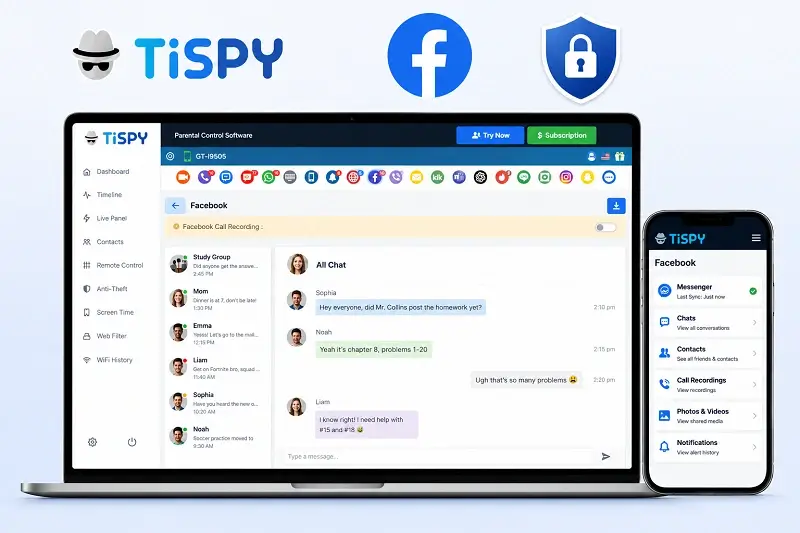
The biggest benefit of responsible monitoring is not having more data. It is having useful visibility when something feels wrong.
TiSPY Tools Driven Facebook monitoring can provide
A) Peace of mind comes first. TiSPY gives parents visibility into Facebook messages, posts and timeline activity, helping them notice concerns before they become bigger problems.
B) Know who is communicating. Parents can review Facebook activity alongside contact information, making unfamiliar or unexpected connections easier to recognize.
C) Catch warning signs earlier. TiSPY says its AI can alert parents to potential issues, including cyberbullying, online predators and sexting.
D) Spot changes as well as messages.
Its activity timeline provides a broader view of app and website activity, helping parents notice unusual digital behavior.
In short, you will be able to take faster action when a genuine red flag appears. These benefits matter because Facebook safety tips for parents should not stop at changing privacy settings.
NOTE: TiSPY’s service is intended for parental use and applicable laws and required consent must be followed.
Good Facebook parental monitoring is not about reading everything simply because technology makes it possible. It is about knowing enough to protect a child.
Don’t wait for a warning to become a crisis. TiSPY Facebook Tracker gives parents added visibility into Facebook messages, posts, timeline activity and contacts, helping you notice unfamiliar interactions and potential concerns earlier.
Use that visibility to start conversations. Verify suspicious contacts. Act when something genuinely feels wrong.