

In recent years, online romance scams have grown beyond traditional dating apps. It has now become widespread on messaging platforms like WhatsApp. Did you know that romance scams cost US victims over $1.16 billion in nine months?
Scammers now send WhatsApp love messages directly to teens and young internet users. So let’s generate awareness for parents and teens. We will be showing real WhatsApp love scam patterns, how scammers operate, and what warning signs to watch for.
How the Conversation Started
While many documented WhatsApp love scams target adults, the Federal Trade Commission (FTC) notes that the pattern scammers use is the same regardless of age. These begin with friendly contact and slowly build emotional rapport. Everything is done before asking for money. In numerous cases reported to authorities, scammers initially send a message claiming they contacted the wrong number. But then they continued chatting warmly and personally. They may complement interests or life goals, creating a sense of connection over several days.
In one documented analysis of scam patterns similar to what could fool a teenager. It was a scammer posing as “Jennifer” who struck up a WhatsApp conversation by appearing attentive and caring. The scammer then steadily avoided LIVE verification, such as clear video calls and asked for personal favors. This pattern matches widely reported scam behavior where trust is built before harm is intended.
When the Situation Became Suspicious
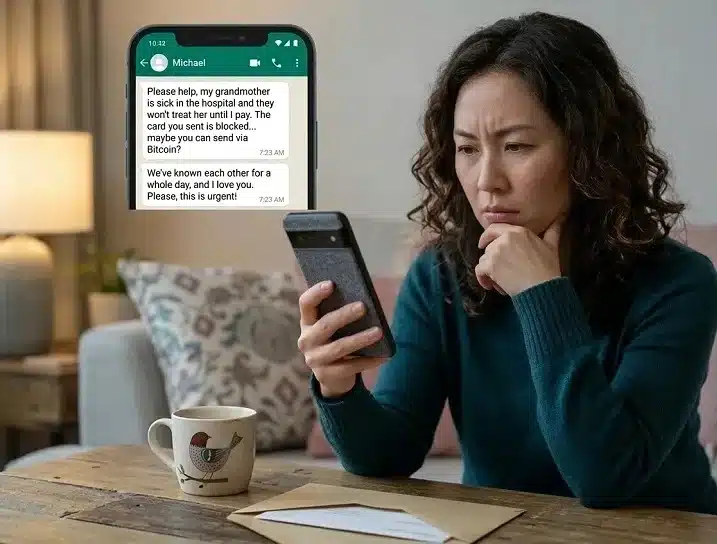
It starts with WhatsApp scammer love messages. Warning signs often appear later. Scammers commonly claim to live abroad or in another city. They give reasons why they can’t meet or video call. They then escalate by inventing financial problems—like medical emergencies or legal fees. Then comes the request for money via cryptocurrency, gift cards or “help” payments. These escalation tactics are consistently reported in WhatsApp dating scams worldwide.
A high‑profile WhatsApp dating scam in India illustrates how emotional trust is exploited. A young man in Bengaluru was contacted through what appeared to be a legitimate dating agency. The lady persuaded him to transfer over ₹32 lakh after weeks of WhatsApp communication and fake logistics coordination. It was too late before the victim realized he was being defrauded.
Why Teenagers Are Vulnerable to WhatsApp Romance Scams
Gen Z women ages 18–24 saw a 40% increase in reports of WhatsApp love scams. Why?
- Teens these days are open to meeting/dating new people online.
- Scammers use praise to create fake connections.
- Stolen photos make fake profiles seem real.
- Scammers mirror interests to build teen trust.
- Teens feel invested before scam intentions are revealed.
- Slow trust building hides obvious warning signs.
- Red flags may appear days or weeks later.
Warning Signs of a WhatsApp Dating Scam
1. Romantic Messages That Appear Too Quickly
Scammers often try to create emotional attachment rapidly. Happens especially in the early stages. Messages that move too fast into affection by calling someone “special,” using pet names or expressing deep feelings after only a few chats. These are the most common tactics in WhatsApp dating scams. These scripted WhatsApp scammer love messages are designed to lower a teen’s guard. It’s done to make them feel understood even though the connection is artificial.
2. Requests for Money or Personal Information
A clear escalation sign is when the person begins asking for money or sensitive personal information. This can take many forms:
- claims of medical bills
- travel assistance
- investment opportunities such as cryptocurrency schemes
These tactics are widely documented in FTC and law enforcement reports. Once the personal information or funds are sent, scammers often keep asking for more under new pretenses.
How Parents Can Safely Monitor WhatsApp Activity
Parents can significantly reduce risk by fostering open dialogue about online interactions.
- Encourage teens to be cautious of unknown contacts. Prod them to share details of their regular chat exchanges beyond family.
- Ask them not to share screenshots or their emotional concerns with strangers.
- Provide your teens a safe space at home to talk about their worries as well as emotional needs.
- Alert them about messages that seem suspicious.
- Explain how WhatsApp love scams work and point out common red flags as shared above.
In addition to education, some families use monitoring tools to stay informed about online interactions. For example, TiSPY – the best parent monitoring software, can help parents detect risky conversations early while respecting privacy. We are helping teens verify identities. If you sense a WhatsApp dating scam, you can do so easily via background checks of photos or mutual connections. This prevents emotional trust from turning into exploitation.
Understanding the Risks of WhatsApp Disappearing Messages

Dating/romance sites and WhatsApp combined account for 15% scam contacts. This is because WhatsApp disappearing messages hide risky chats from parents. Since messages auto-delete, harmful interactions may disappear unnoticed. Teaching teens the risks and using tools like TiSPYhelps parents catch WhatsApp love scams early. We provide a WhatsApp chat tracker for teen safety.
How TiSPY Helps Protect Teens Online
TiSPY supports safer online communication for families. It’s a tool to promote awareness, not fear. How?
- Using TiSPY increases visibility into teen WhatsApp activity.
- TiSPY gives parents real‑time insights into chats.
- It lets parents review chats before trouble starts.
- Parents can see message timestamps and contact info.
- Captures interactions that disappearing messages delete.
- Alerts when suspicious words appear in chats.
- Helps verify unknown contacts quickly and safely.
- Parents can guide teens using clear conversation logs.
Safeguard Your Teens With TiSPY
In 2025, WhatsApp removed 6.8 million scam accounts. These all were tied to worldwide romance and fraud activities. Thus, having awareness of common scam tactics is essential for both parents and their teens. Equally important is open communication between parents and teens. Together, these are the strongest protections against these WhatsApp romance scams. Protect your teens from WhatsApp romance scams with TiSPY. Start safeguarding their online interactions today!